
Walmart Just Declared War on Amazon. Here’s What It Means for Amazon Sellers
Last February 1st, Walmart made a leadership decision that reshaped the direction of eCommerce.

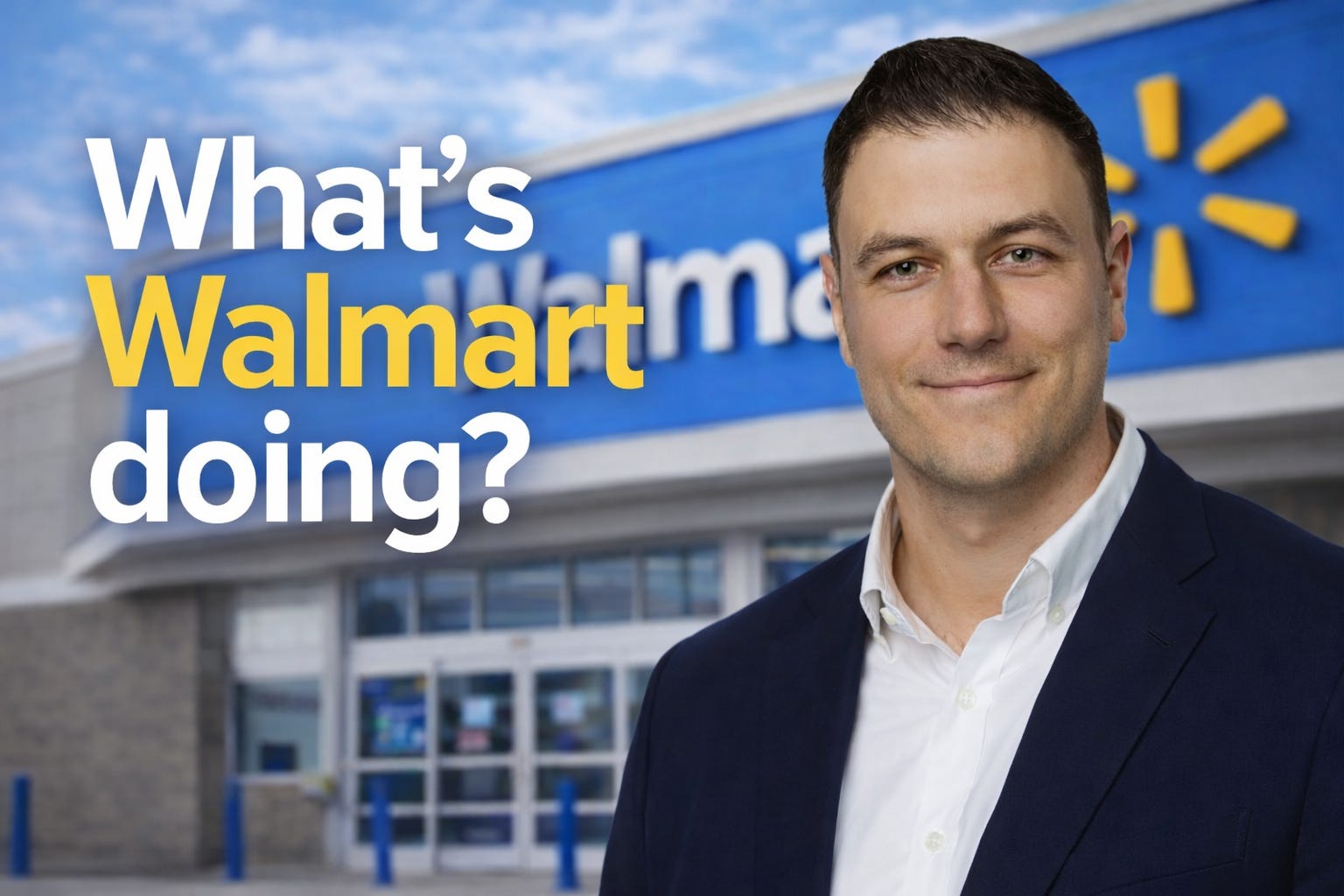
Walmart just made an executive leadership move that will define the next phase of online retail.
They put an eCommerce and supply chain executive in charge of a $500 billion business that includes 4,600 physical stores.
David Guggina’s background is automation, logistics, and digital commerce.
Store operations were not part of his path.
Leadership choices reveal what a company intends to optimize.
Walmart is prioritizing systems, fulfillment speed, AI integration, and infrastructure depth.
The Infrastructure Shift
Over the past six months, Walmart has moved aggressively.
Customers can now discover and purchase products directly inside ChatGPT.
Google Gemini integrates Walmart products into AI-driven shopping experiences.
The $2.3 billion acquisition of Vizio added a connected TV advertising platform with millions of active households.
Three-hour delivery now reaches 95% of U.S. households.
eCommerce has reached profitability. Advertising revenue is accelerating.
These moves connect physical stores, digital platforms, AI environments, and advertising into one operating system.
This is infrastructure expansion.
The trap you don’t want to fall into
Many brands still get most of their revenue from Amazon.
That concentration limits your options. If Amazon raises fees, ad costs climb, or the algorithm shifts, your margins and traffic move with it. You don’t get a vote.
Amazon is still the largest marketplace. That hasn’t changed.
What has changed is the competitive landscape around it.
Walmart now operates thousands of local fulfillment points through its stores.
Customers can pick up the same day
Return in person
Receive deliveries within hours in many markets.
On top of that, Walmart connects advertising across its website, physical stores, and connected TV platforms.
At the same time, product discovery is shifting. AI tools increasingly decide what gets shown to customers. That means your product data needs to be structured, accurate, and integrated into those systems. If it isn’t, you simply won’t surface.
Revenue concentration doesn’t disappear because it’s inconvenient. It has to be understood, measured, and managed deliberately.
The Opportunity Window
Walmart’s advertising platform isn’t as crowded as Amazon’s.
Costs are lower.
Competition is lighter.
AI-driven shopping is still forming, which means positioning today is easier than it will be later.
That won’t last, so my advice is to get in now. The advantage belongs to operators who move early and execute well.
Here’s what that looks like:
Know your exposure.
Calculate how much revenue depends on Amazon. If it’s heavily concentrated, that’s a risk you should quantify.Learn how Walmart actually converts.
Same-day pickup, local returns, and fast delivery change buyer behavior. Understand how those features impact your category.Test Walmart Connect advertising.
Start small. Measure performance. Build data before the channel becomes saturated.Clean your product data.
AI systems recommend products based on structured, accurate information. Titles, attributes, pricing, and inventory feeds need to be consistent.
Keep it simple.
Choose one product.
Test deliberately.
Improve what works.
Then scale with control.
Early positioning reduces long-term cost.

Book a Free Call With Neil!
Did you know we offer a no-cost, no-pressure discovery call to all our newsletter readers and podcast listeners? Yes! We’re excited to talk about your plans, your goals and how e-commerce can be the vehicle to make your dreams come true!
Step one: click here or the image below to watch our overview video and then schedule a call:

Enjoyed this issue?
Found it educational? Agree or disagree with a thing or two? Awesome! Please like and/or comment below so we can produce more content like this!
